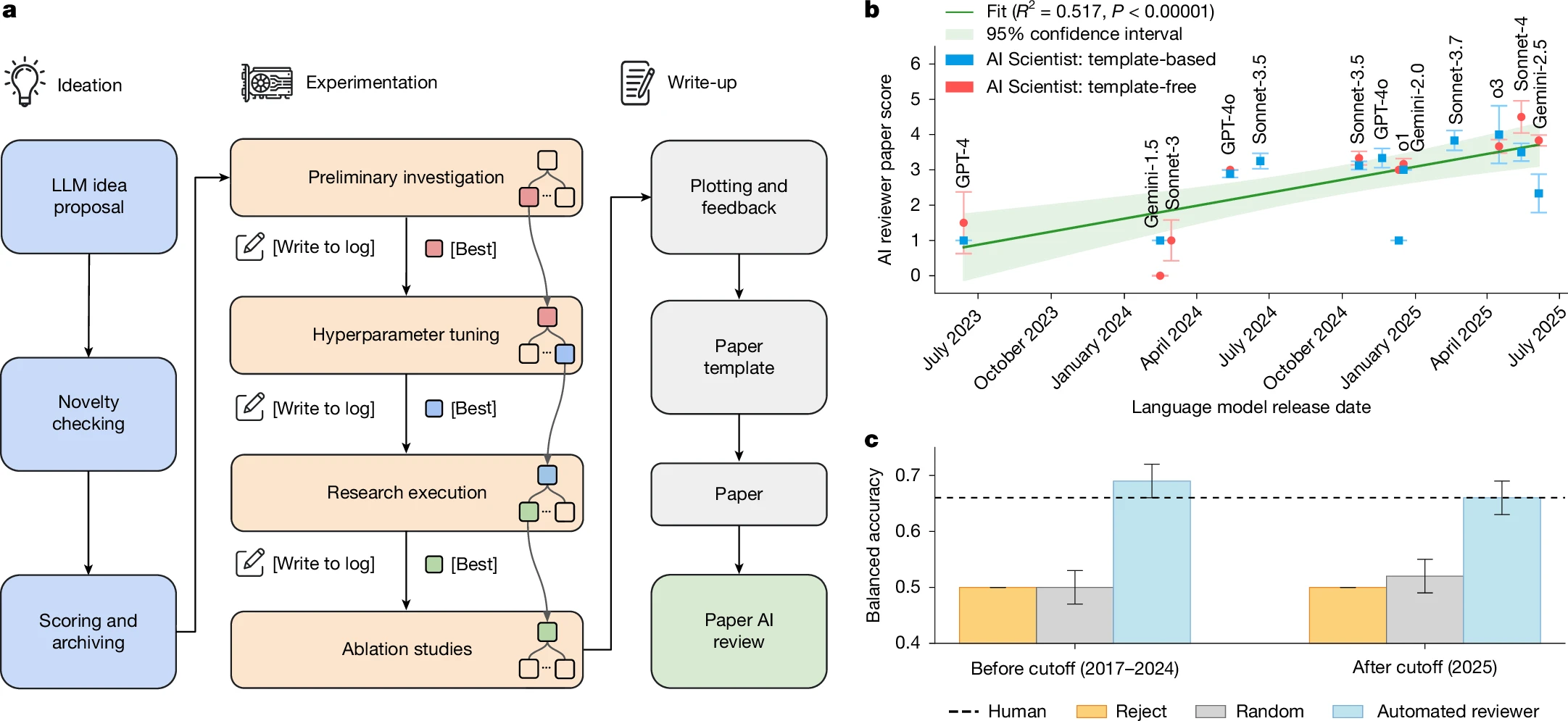
This paper introduces ScientistTwo, a multi-agent framework intended to autonomously conduct scientific research from problem formulation through experimentation, ablation studies, and simulated peer review. It evaluates the system on tasks associated with ICLR, ICML, and NeurIPS papers, reporting automated generation of research papers and executable codebases.
AnyJev is an open-source GitHub project that uses a single LLM prefill to produce typed decisions and calibrated probabilities without generation, parsing, or fine-tuning. It includes methods for reducing answer-order sensitivity and improving calibration with a small number of labels.
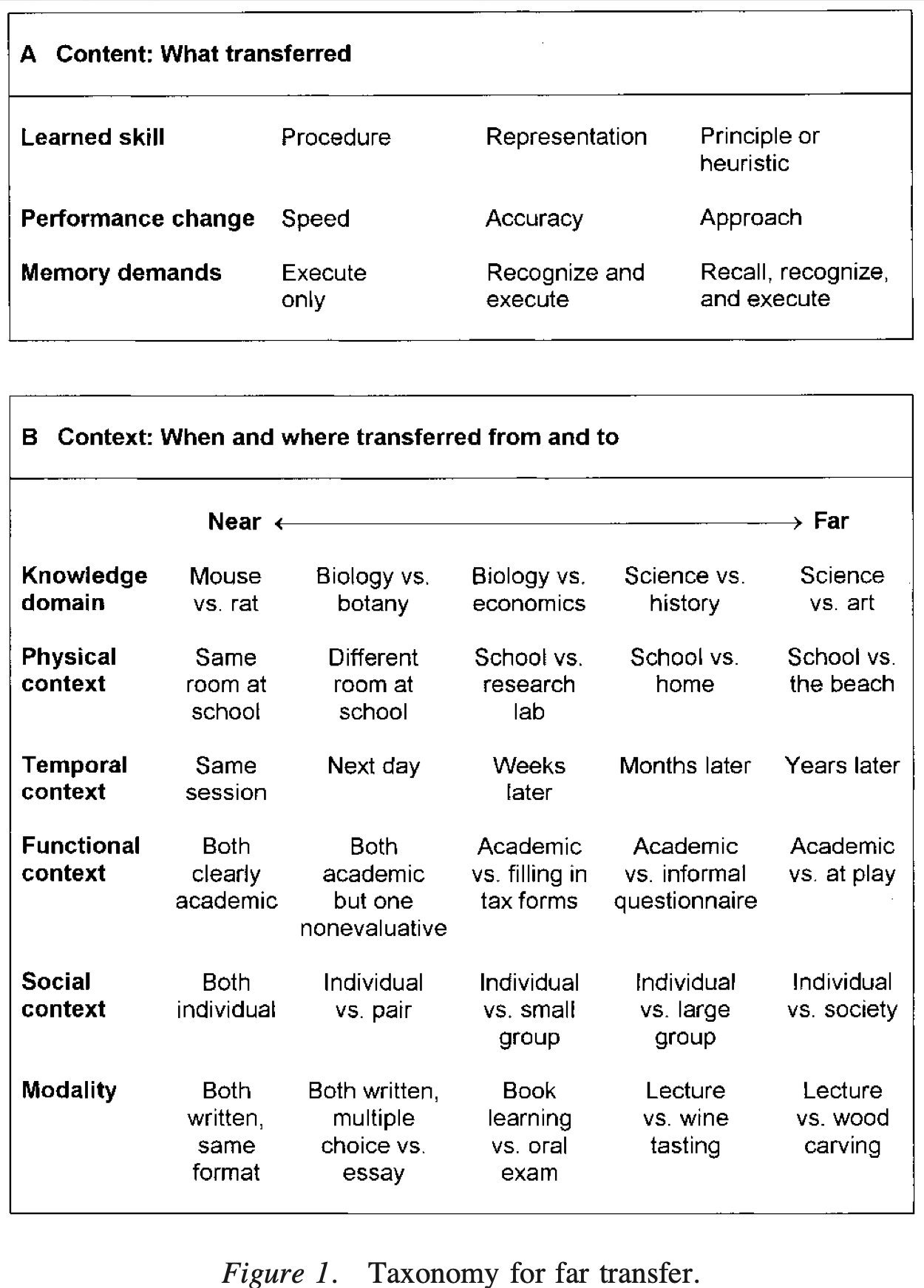
This 2002 paper proposes a taxonomy for distinguishing near and far transfer of learning across knowledge domains, physical, temporal, functional, social, and modality contexts. It provides a framework for evaluating how learned skills, representations, and principles are applied in new situations.
My note
A paper published in 2002, and very relevant now! One research direction is to to apply and evaluate learning theories, developed years ago, on AI agents.
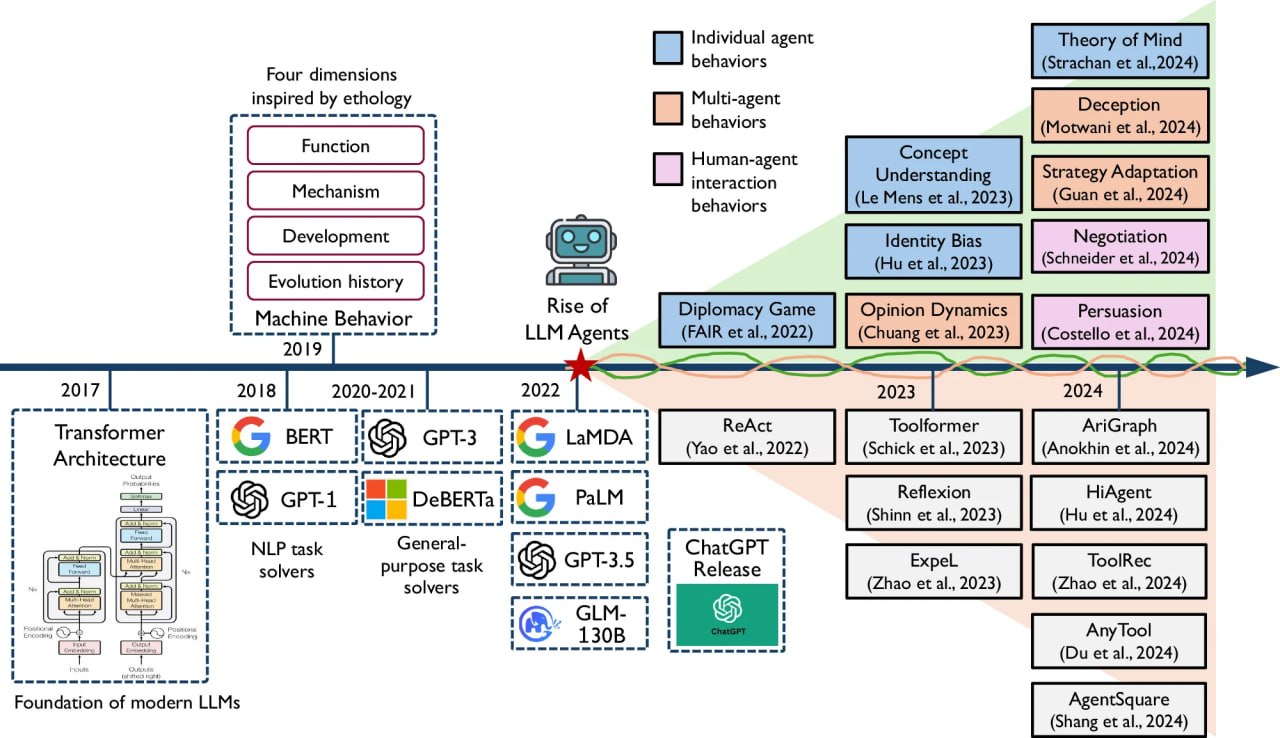
An academic paper examining the emergence of large language model agents. The accompanying figure traces developments from early transformer architectures and language models to agent behaviors such as planning, negotiation, deception, and theory of mind.
Elicit examines literature-based discovery, the practice of finding overlooked connections and recoverable knowledge in obscure or neglected research papers. It discusses barriers to discovery and examples such as Don Swanson’s work connecting magnesium deficiency research with migraine.
My note
One overlooked potential outcome of AI growth is uncovering gems from centuries of research buried in libraries and connecting them to modern science. Remember, Mendel (a.k.a. the Father of Modern Genetics) published his findings in 1866, only to be ‘rediscovered’ in 1900 (34 years later).
A Nature paper associated with the AI Scientist research-automation project. From abstract: "We present The AI Scientist, which creates research ideas, writes code, runs experiments, plots and analyses data, writes the entire scientific manuscript, and performs its own peer review"
How the Notes section is fed and what the different parts of each entry mean.
My note
I send links, posts, podcasts, and the occasional meme to a small Telegram bot. It writes a one-line summary, files the item here, and the site rebuilds. My own comment, when I have one, appears in this box. Everything here is also in the RSS feed.
My note
A paper published in 2002, and very relevant now! One research direction is to to apply and evaluate learning theories, developed years ago, on AI agents.